
The Hidden Risk in Your Smart Building Strategy
You’re planning a major smart building project. The specification calls for KNX—the gold standard in building automation. You’ve found a supplier. They offer great prices. There’s just one catch: they only carry one brand.
Sounds convenient, right? One brand means simpler ordering, consistent aesthetics, and presumably better support.
But here’s what they won’t tell you: single-brand sourcing could be the most expensive decision you make this year.
I’ve spent 10 years as a KNX brand representative—the first KNX tutor in China. I’ve seen distributors lock themselves into exclusive partnerships, only to face product discontinuations, price hikes, and limited flexibility when client needs evolved.
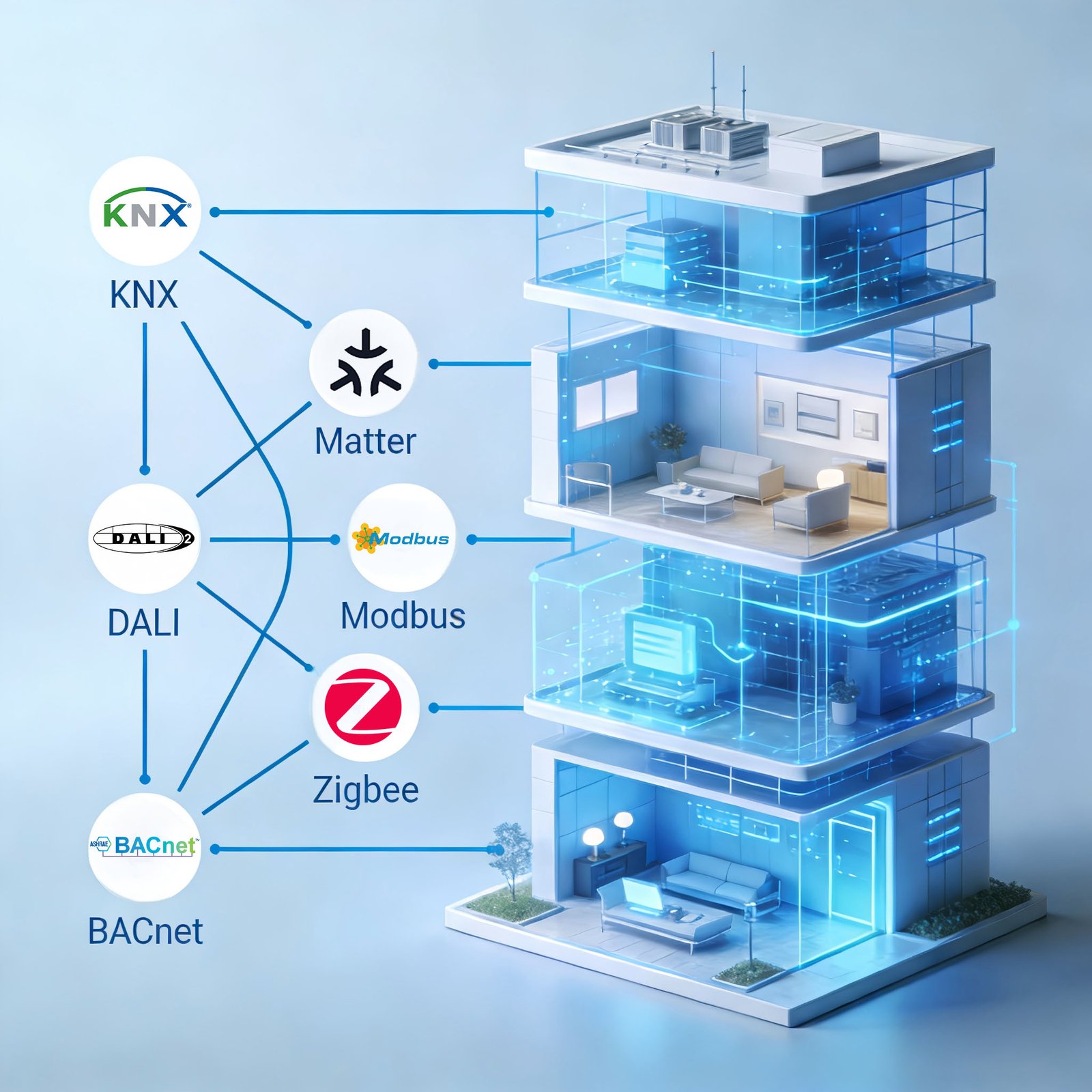
Today, I source from multiple reputable brands for my clients. Not because I can’t pick a favorite. But because the best solution isn’t the one I have—it’s the one that fits your project.
What Is Single-Brand KNX Sourcing?
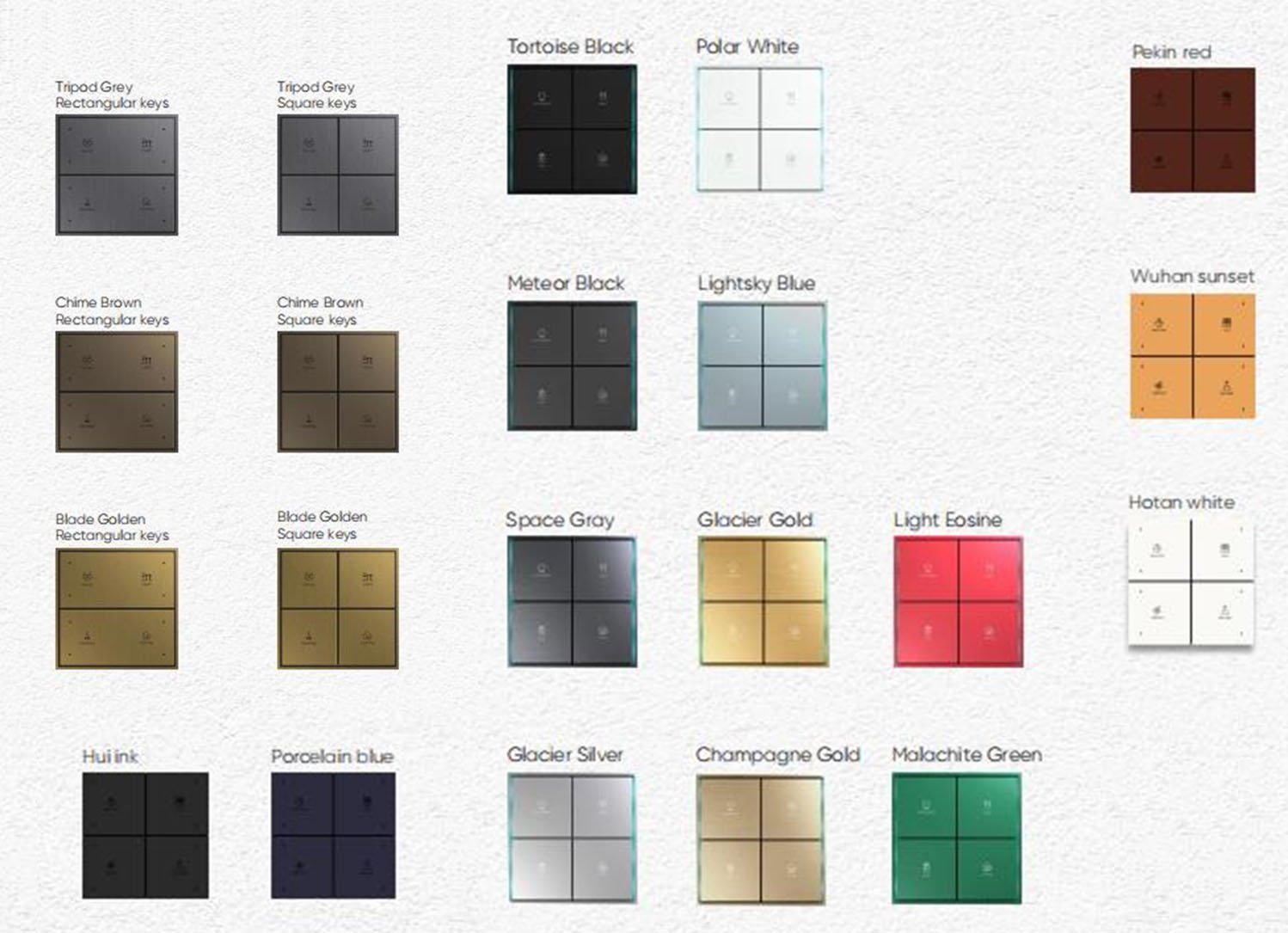
Single-brand sourcing means committing to one manufacturer for your entire KNX system —devices, switches, sensors, actuators, everything.
Common scenarios:
- You’re an authorized dealer for Brand X
- Your integrator has a preferred partnership
- You found a “too good to pass up” bulk deal
- The architect specified a particular aesthetic
The promise: Simplicity, consistency, and better pricing through volume.
The reality: Dependency, limited options, and hidden risks.
What Is Multi-Brand KNX Sourcing?
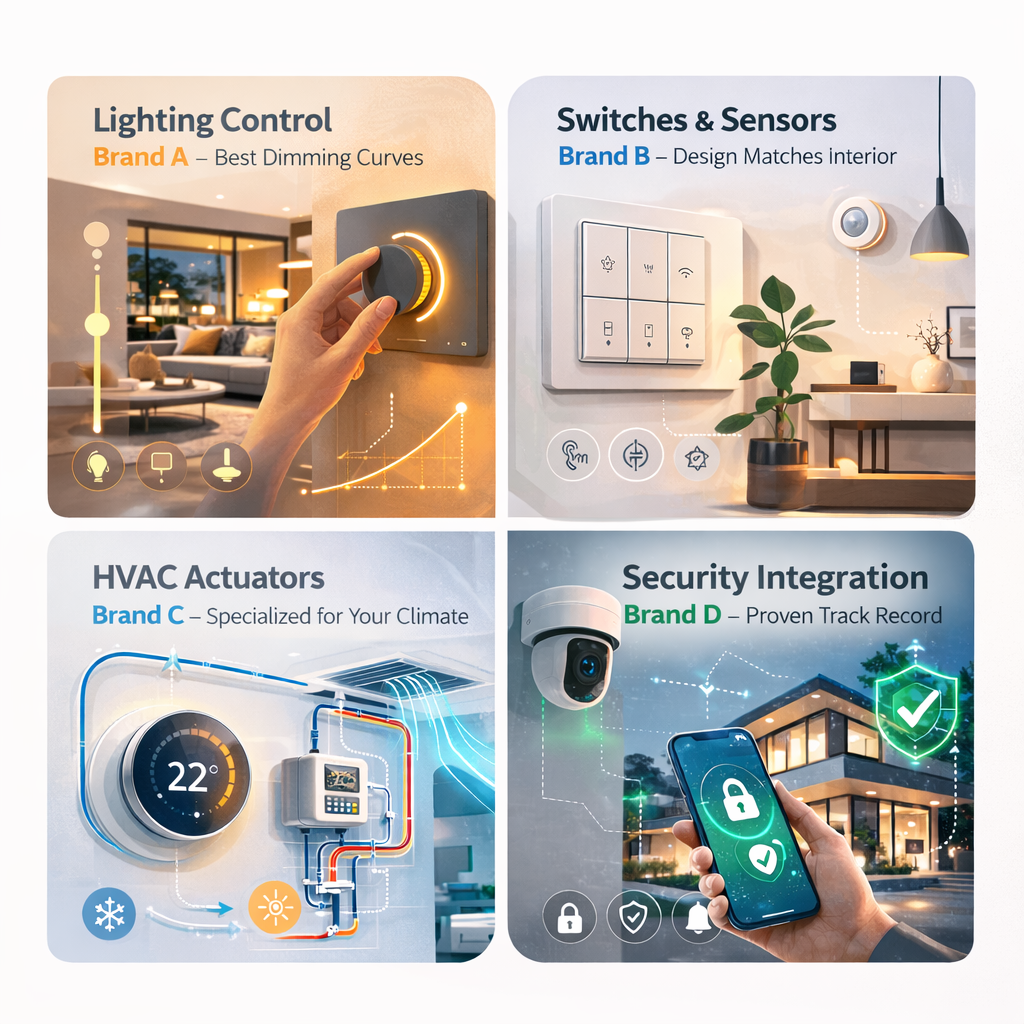
Multi-brand sourcing means selecting the best device for each function from different KNX-certified manufacturers—all working together on the same KNX bus.
How it works:
- Lighting control: Brand A (best dimming curves)
- Switches/sensors: Brand B (design matches interior)
- HVAC actuators: Brand C (specialized for your climate)
- Security integration: Brand D (proven track record)
The KNX advantage: All KNX-certified devices communicate seamlessly through ETS (Engineering Tool Software), regardless of manufacturer. That’s the whole point of an open standard.
Head-to-Head Comparison
| Factor | Single-Brand | Multi-Brand | Winner |
|---|---|---|---|
| Product Range | Limited to one catalog | Access to 500+ manufacturers | 🏆 Multi-Brand |
| Price Flexibility | Fixed pricing tier | Competitive bidding per category | 🏆 Multi-Brand |
| Supply Chain Risk | High (one point of failure) | Distributed (backup options) | 🏆 Multi-Brand |
| Design Flexibility | One aesthetic | Match any design requirement | 🏆 Multi-Brand |
| Technical Support | Single source | Multiple expert networks | 🏆 Multi-Brand |
| Simplicity | One ordering channel | Requires coordination | 🏆 Single-Brand |
| Volume Discounts | Easier to negotiate | Requires more effort | 🏆 Single-Brand |
This isn’t theoretical. Single-brand systems create single points of failure—not just technically, but commercially.
When Single-Brand Might Make Sense
I’m not here to sell you on multi-brand for every scenario. Here’s when single-brand could work:
- ✅ Small residential projects where aesthetics are paramount and the client loves one brand’s design language
- ✅ Budget-constrained projects where volume discounts from one supplier outweigh flexibility benefits
- ✅ Maintenance simplicity is the top priority (e.g., facility teams with limited training)
- ✅ Architectural specifications that mandate specific products
But even in these cases, I recommend keeping 2-3 backup suppliers qualified.
When Multi-Brand Is the Clear Winner
- 🏆 Commercial buildings with long lifecycles (10+ years)
- 🏆 Mixed-use developments where different zones have different requirements
- 🏆 International projects where brand availability varies by region
- 🏆 Budget-flexible projects where “most suitable” beats “cheapest available”
- 🏆 Future-proofing is a priority (technology evolves, open standards endure)
The Independent Consultant Advantage
Here’s what sets my approach apart:
I’m not tied to any single brand. After 10 years as a KNX brand rep, I chose independence for a reason: clients deserve unbiased recommendations.
My sourcing philosophy:
- Function first – What does the project actually need?
- Budget alignment – Not cheapest, not most expensive—most suitable
- Supply chain resilience – Multiple qualified suppliers per category
- Long-term support – Brands with proven track records
- Integration ready – KNX + Matter + Zigbee + security systems
The result: You get a system designed for your building, not a supplier’s catalog.
How Multi-Brand Sourcing Works in Practice
Step 1: Requirements Analysis
- Building type and use cases
- Budget parameters
- Timeline and milestones
- Aesthetic requirements
- Integration needs (BMS, security, AV, etc.)
Step 2: Brand Selection by Category
| Category | Selection Criteria |
| Switches/Sensors | Design, touch feedback, price |
| Actuators | Load capacity, reliability |
| HVAC Control | Protocol support, precision |
| Lighting Control | Dimming quality, scenes |
| IP Infrastructure | Routing capacity, security |
Step 3: Competitive Sourcing
- Request quotes from 2-3 suppliers per category
- Compare lead times, not just prices
- Verify stock availability
- Confirm technical support coverage
Step 4: Integration Planning
- Single ETS project file (all brands)
- Unified commissioning process
- Coordinated delivery timeline
- Single-point accountability (your consultant)
Addressing Common Concerns
“Won’t multiple brands complicate maintenance?”
Not with KNX. All devices appear in the same ETS project. Fault diagnosis works identically regardless of manufacturer. Spare parts are sourced from the same supplier network.
“What if brands don’t work together?”
They will—if they’re KNX-certified. KNX certification requires interoperability testing. A Gira switch controls an MDT actuator the same way it controls a Gira actuator.
“Isn’t it more expensive to manage multiple suppliers?”
Initially, yes. But consider:
- Competitive pricing per category (10-30% savings)
- No vendor lock-in price increases
- Faster problem resolution (can switch suppliers)
- Long-term flexibility (no costly migrations)
The Bottom Line
Single-brand sourcing = Simplicity today, constraints tomorrow.
Multi-brand sourcing = Coordination today, flexibility forever.
For most commercial and high-end residential projects, multi-brand KNX sourcing delivers:
- ✅ Better pricing through competition
- ✅ Reduced supply chain risk
- ✅ Design flexibility without compromise
- ✅ Future-proof technology choices
- ✅ Access to best-in-class devices per category
Ready to Explore Multi-Brand KNX Sourcing?
If you’re a distributor or system integrator sourcing KNX products from China, I can help you:
- 📋 Evaluate your current sourcing strategy – Single or multi-brand?
- 🏭 Connect with multiple certified suppliers – Factory-direct meetings available
- 💰 Match suppliers to your budget tier – Not cheapest, most suitable
- 🔧 Ensure integration compatibility – KNX + Matter + Zigbee expertise
- 🌍 Support international projects – Experience with Dubai, Europe, Asia-Pacific
Let’s discuss your next project. I’ll give you honest recommendations—not based on what I sell, but on what you need.
About the Author
With 10 years of experience as a KNX brand representative and the first KNX tutor in China, I now operate as an independent sourcing consultant. I help international distributors and system integrators source smart home products from China—without the limitations of single-brand partnerships.
Specializations: KNX, Matter, Zigbee, home cinema, and security system integration.
📊 Data Sources & References
All market data and statistics cited in this article are sourced from verified industry reports and surveys:
- KNX Market Size & Growth Forecast: Business Research Insights – “KNX Products Market Growth to hit $33.58 Bn (2026-2035)” – View Report
- Alternative KNX Market Analysis: Global Growth Insights – “KNX Products Market Size Growth Report 2026-2035” – View Report
- Smart Home Automation Market: Precedence Research – “Smart Home Automation Market to reach USD 1,359.21 Billion by 2035” – View Report
- Supply Chain Risk Statistics: McKinsey & Company – “Supply chain risk pulse 2025: Tariffs reshuffle global trade priorities” – View Survey
- KNX Association Official: KNX.org – “500+ member manufacturers globally” – View Manufacturers List
- Enlighted Case Study: KNX Supply – “Don’t Put All Your Tech in One Brand: The Enlighted Case” – Read Case Study
Last Updated: March 8, 2026