
Is Matter Mature Enough in 2026?
TL;DR
- ✅ Matter has evolved from basic device connectivity into a complete smart home interoperability ecosystem covering appliances, energy, security, and video products.
- ✅ Matter 1.6 features such as Joint Fabric and NFC onboarding focus on seamless multi-ecosystem experiences rather than simply adding more device categories.
- ✅ Matter smart home adoption is accelerating in residential projects, while hotels and commercial buildings still depend on KNX, DALI, and BACnet.
- ✅ Matter ecosystem growth is happening alongside Zigbee 4.0, Aliro, and other open standards rather than replacing existing technologies.
- ✅ Is Matter ready for smart homes? For most homeowners and OEM brands, the answer in 2026 is yes—but hybrid architectures remain the long-term reality.
Matter in 2026: From Smart Bulbs to Whole-Home Infrastructure
When Matter 1.0 was officially released in October 2022, its mission was straightforward: solve the smart home’s biggest problem—cross-brand compatibility. For the first time, devices from different manufacturers could work together through a common application-layer standard based on IP technologies such as Wi-Fi, Thread, and Ethernet. BLE was used only for onboarding and commissioning.
At that stage, Matter mainly supported basic categories including lighting, smart plugs, door locks, thermostats, curtains, sensors, TVs, and media devices. Many people still viewed it as a “smart bulb protocol” rather than a complete smart home platform.
Four years later, that perception has changed dramatically.
Matter’s Evolution: Four Years, Eight Major Releases
| Version | Year | Major Milestone |
|---|---|---|
| Matter 1.0 | 2022 | Lighting, locks, curtains, HVAC, Multi-Admin |
| Matter 1.2 | 2023 | Refrigerators, air conditioners, robot vacuums, air purifiers |
| Matter 1.3 | 2024 | Energy management, EV charging, water devices |
| Matter 1.4 | 2024 | Solar systems, battery storage, heat pumps |
| Matter 1.5 | 2025 | Cameras, video doorbells, outdoor devices |
| Matter 1.6 | 2026 | Matter 1.6 features, including Joint Fabric, NFC onboarding, smarter user experiences |
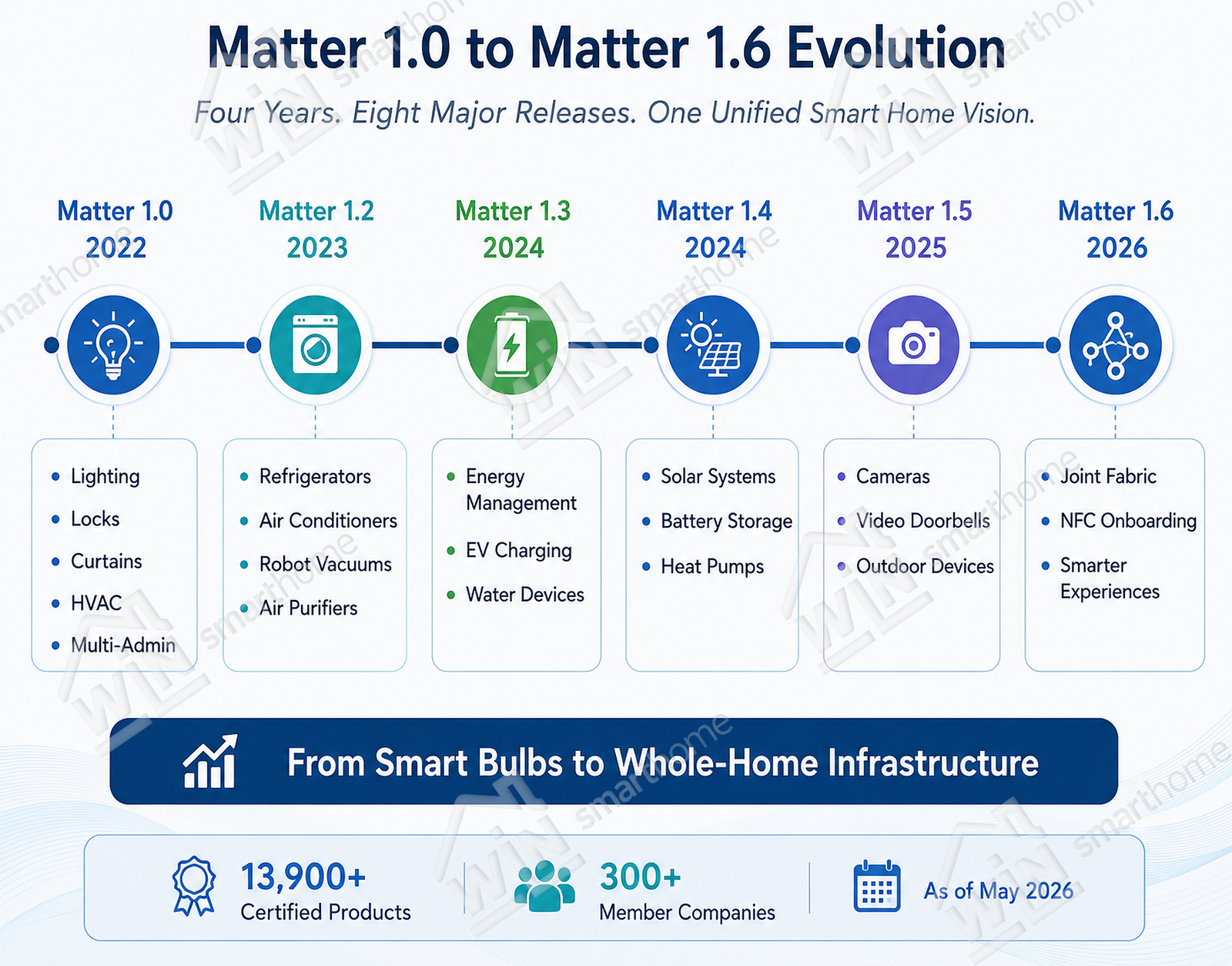
According to the CSA ecosystem data cited in the report, Matter had reached more than 13,900 certified products and software offerings, supported by over 300 member companies worldwide by May 2026.
The speed of this expansion is one of the strongest signals that Matter is moving far beyond its original use cases.
Matter Is No Longer Just About Lights and Switches
The most important change is not simply the number of supported devices, but the type of devices entering the ecosystem.
Recent Matter releases have added support for:
- Robot vacuums and home cleaning systems
- Refrigerators, ovens, and washing machines
- Solar inverters and battery energy storage systems
- EV chargers and energy reporting
- Cameras and video doorbells
- Air quality and environmental sensors
- Heat pumps and water heaters
This reflects a much bigger vision.
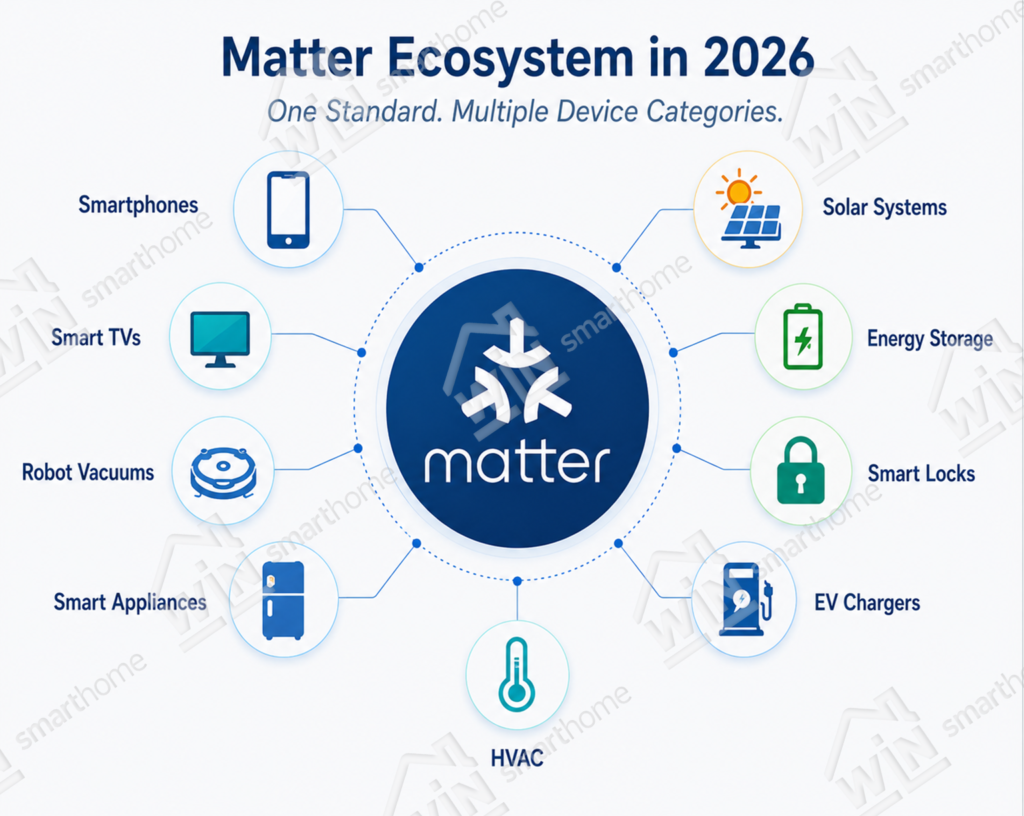
Unlike many traditional protocols that focus on a specific category, Matter aims to provide a common language for the entire connected home—from entertainment and appliances to energy management and security systems.
A Platform Backed by Global Technology Giants
Another reason for Matter‘s rapid growth is the companies behind it.
Apple, Google, Amazon, Samsung, and hundreds of other CSA members are not only building smart home products—they already control many of the technologies people use every day, including smartphones, TVs, voice assistants, appliances, and cloud services.
This gives Matter a natural advantage that few previous smart home standards have enjoyed.
The goal is no longer to make a smart bulb work with another app.
The goal is to create a seamless experience where devices across different brands, categories, and ecosystems can work together as part of one connected home.
That does not mean Matter will replace KNX, DALI, or BACnet in professional projects. But it does suggest that Matter has already matured far beyond its early reputation as a consumer gadget protocol.
Today, it is increasingly becoming the interoperability layer for modern residential smart living.
What Matter Already Does Better Than Before
One of the biggest reasons Matter is gaining momentum is that it is no longer focused solely on connectivity. Recent versions have significantly improved device coverage, user experiences, and ecosystem integration.
Better Device Coverage Across the Entire Home
When Matter 1.0 launched in 2022, it mainly supported lighting, smart plugs, locks, curtains, thermostats, and basic sensors. Today, the ecosystem has expanded far beyond traditional smart home products.
| Matter 1.0 (2022) | Matter 1.6 (2026) |
|---|---|
| Lights & Plugs | Appliances & Robot Vacuums |
| Locks & Curtains | Cameras & Video Doorbells |
| Thermostats | Solar, Batteries & EV Chargers |
| Basic Sensors | Air Quality & Energy Management |
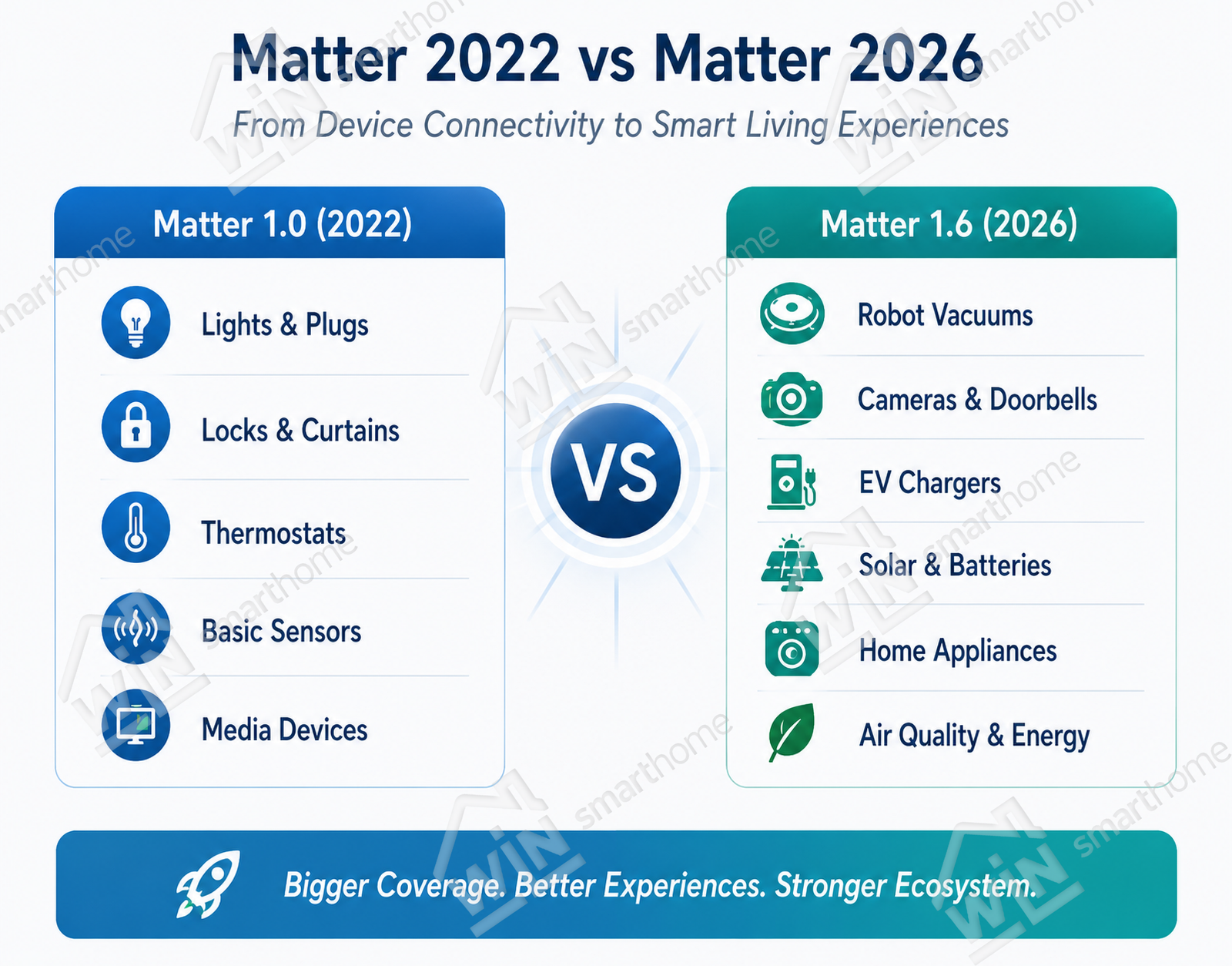
Matter now supports refrigerators, washing machines, air conditioners, robot vacuums, cameras, solar inverters, battery storage systems, heat pumps, and EV chargers, making it much closer to a complete smart home platform than a simple device protocol.
Better Multi-Ecosystem Experiences
Another major improvement is the user experience across different ecosystems.
Matter introduced Multi-Admin, allowing a single device to be controlled by Apple Home, Google Home, Amazon Alexa, and other platforms simultaneously. More recently, Matter 1.6 features introduced Joint Fabric, enabling multiple ecosystems to share the same Matter network without consuming additional fabric slots. This creates a much smoother experience for households using different mobile platforms.
For consumers, this means less ecosystem lock-in and greater flexibility when choosing products.
Better Installation and Local Control
Installation has also become easier.
Matter 1.6 adds full NFC onboarding support, allowing certain devices to be configured even before power is connected—an important improvement for large residential projects and batch installations.
At the same time, Matter continues to emphasize local communication through Wi-Fi, Thread, and Ethernet, reducing cloud dependency and improving reliability. The result is faster response times, stronger privacy protection, and a more resilient smart home experience.
The biggest change is that Matter is no longer competing on device quantity alone.
It is increasingly competing on user experience, interoperability, and the ability to support an entire connected lifestyle rather than just individual smart products.
What Challenges Does Matter Still Face?
Although Matter has matured significantly, several challenges still need to be addressed before it can become a truly universal smart home standard.
What New Trends Are Worth Watching?
Beyond Matter itself, the CSA ecosystem is introducing additional standards that could further shape the future of smart homes and smart buildings.
- Zigbee 4.0: The next generation of Zigbee focuses on stronger security, Zigbee Direct experiences, Sub-GHz support, and smoother upgrade paths for existing Zigbee installations through Matter-to-Zigbee gateways.
- Aliro: A new digital access standard that supports NFC, BLE, and UWB technologies, enabling secure and interoperable mobile credentials across different ecosystems and accelerating the adoption of keyless smart entry systems.
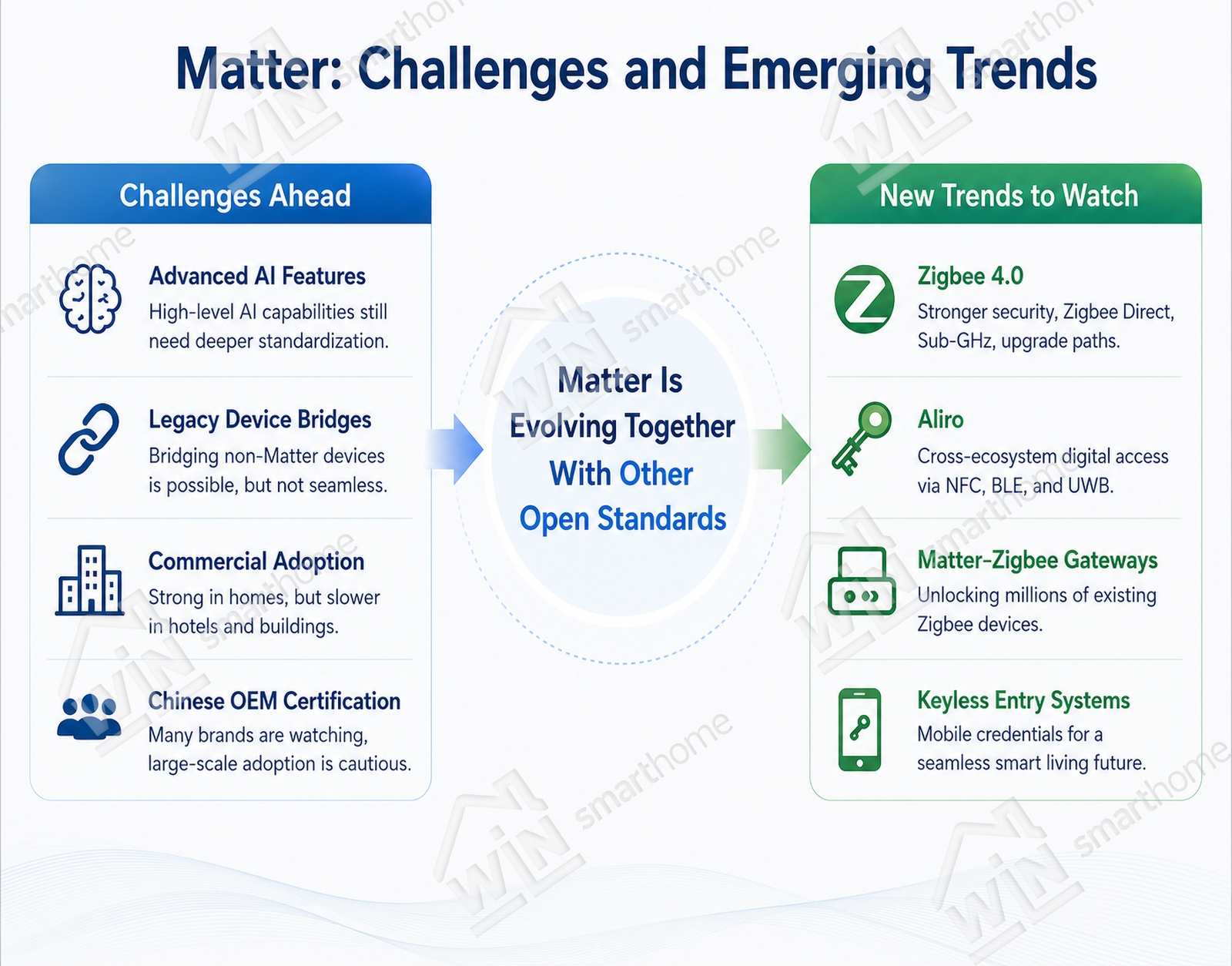
These developments show that Matter is not evolving alone.
Instead, it is becoming part of a broader ecosystem of open standards designed to improve interoperability, security, and long-term compatibility across the entire smart living industry.
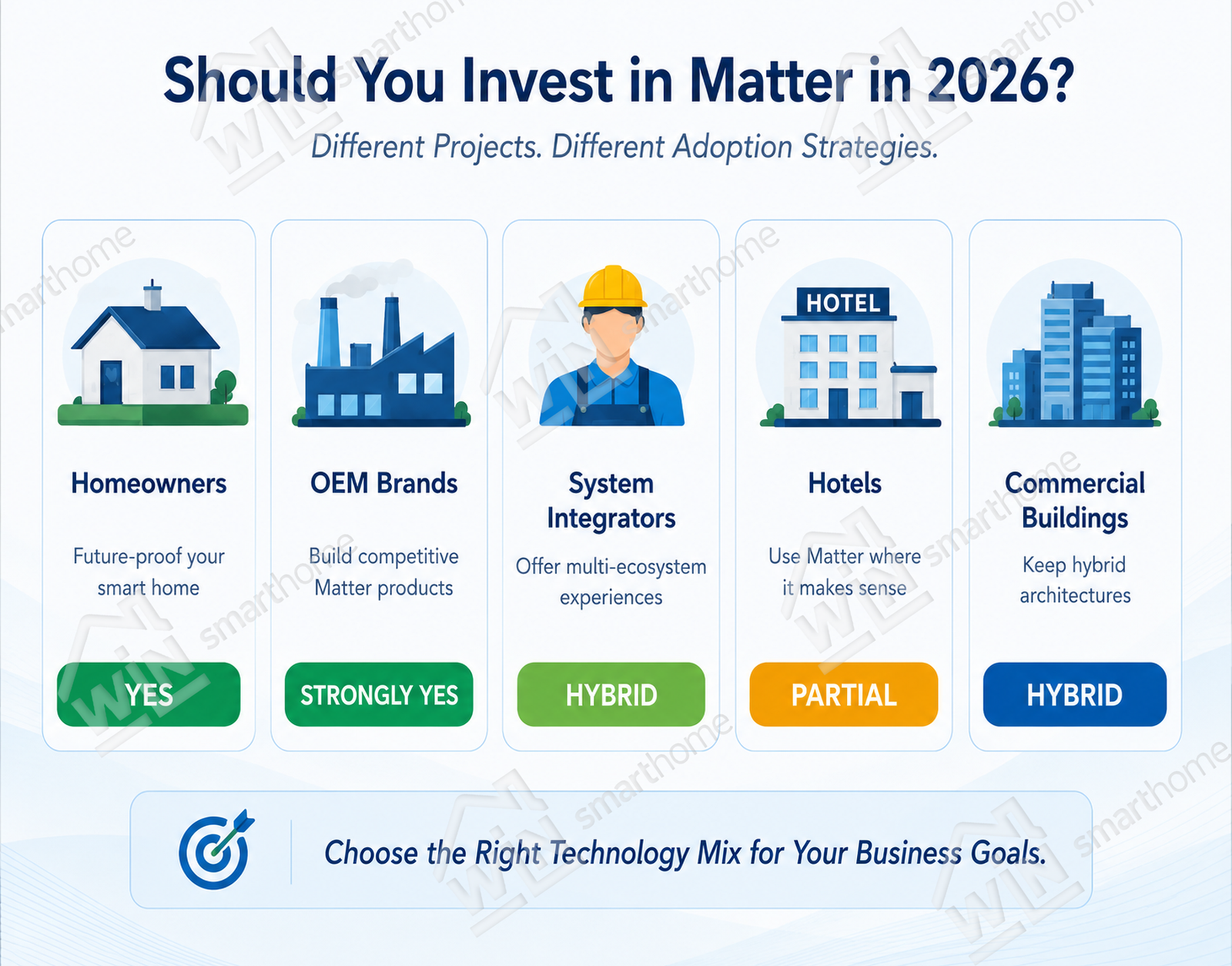
Should You Invest in Matter in 2026?
After four years of development, Matter has clearly moved beyond the experimental stage. The question is no longer whether Matter will survive, but where and how it should be adopted.
The answer depends on the type of project.
Recommendations by User Type
| User Type | Recommendation | Why |
|---|---|---|
| Homeowners | ✅ Yes | Better interoperability and easier device selection |
| OEM Brands | ✅ Strongly Yes | Growing global demand and ecosystem support |
| System Integrators | ⚠️ Hybrid Approach | Matter works well alongside Zigbee and KNX |
| Hotels | ⚠️ Partial Adoption | Best for guest devices rather than core infrastructure |
| Commercial Buildings | ⚠️ Hybrid Architecture | KNX, DALI, and BACnet remain essential |
For Homeowners: The Timing Is Better Than Ever
For residential users, Matter is becoming an increasingly practical choice.
Device support is broader, setup experiences are improving, and major platforms including Apple Home, Google Home, Alexa, and SmartThings now offer native Matter integration.
For new smart home projects, investing in Matter today provides greater flexibility and reduces the risk of being locked into a single ecosystem.
For OEM Manufacturers: The Opportunity Is Growing
For Chinese manufacturers and private-label brands, Matter is no longer something to watch from the sidelines.
Global buyers are increasingly asking about Matter compatibility, especially in North America and Europe. Companies that begin building Matter capabilities today will be better positioned for future demand.
At the same time, mature ecosystems such as Tuya, Zigbee, and Wi-Fi will continue to play important roles. In most cases, supporting multiple protocols remains the most practical business strategy.
For Hotels and Commercial Buildings: Hybrid Systems Will Remain the Norm
Professional projects have different requirements from consumer smart homes.
Hotels still rely heavily on:
- KNX for room automation
- DALI for lighting control
- BACnet for HVAC integration
Matter can complement these systems by connecting guest-facing devices such as smart TVs, speakers, and consumer appliances, but it is unlikely to replace the infrastructure layer in the near future.
Final Thoughts: The Journey Toward a Unified Smart Home Has Only Just Begun
The ultimate goal of smart homes is not simply unification—it is what becomes possible after unification happens. In just four years and eight major releases, Matter has evolved from a protocol that helped “smart bulbs connect” into a comprehensive interoperability framework covering home appliances, kitchen devices, energy systems, video products, and security solutions. It is no longer a concept discussed only in industry conferences; it is already part of everyday life in millions of homes worldwide. Today, a light bulb carrying the Matter logo can be controlled through multiple ecosystems, regardless of brand boundaries.
The journey toward a unified smart home ecosystem has already come a long way—but the most exciting opportunities are still ahead.
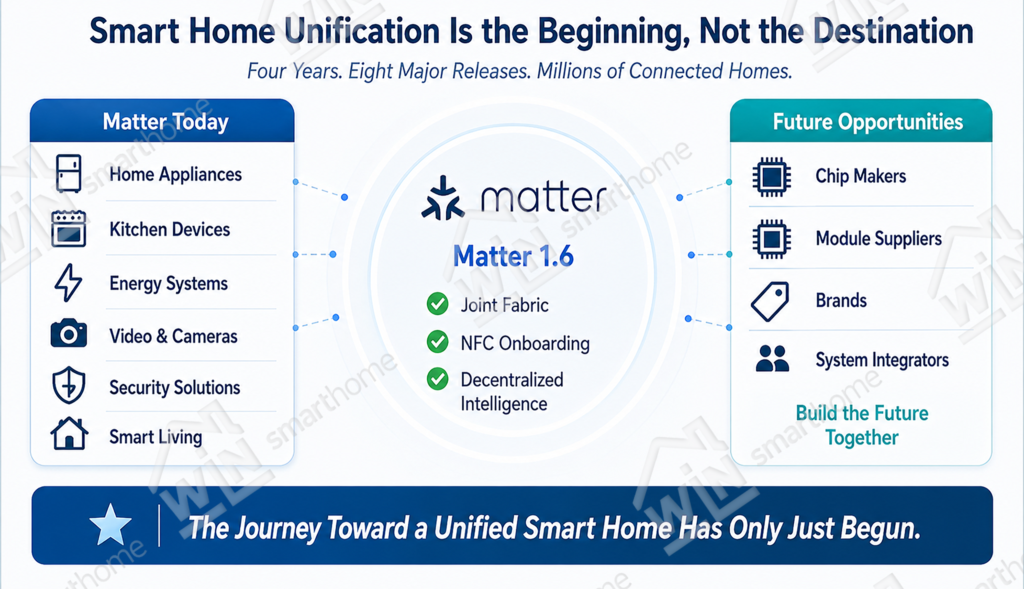
Matter 1.6 features send perhaps the clearest signal yet about where the industry is heading. The next stage of competition is no longer about how many device categories a platform supports, but how seamless the cross-ecosystem experience becomes. Features such as Joint Fabric make shared home management more natural, NFC onboarding significantly improves installation efficiency, and new intelligent control mechanisms demonstrate the potential of decentralized smart living. For chip makers, module suppliers, brands, and system integrators, now is the ideal time to rethink product strategies around Matter. The journey toward a unified smart home ecosystem has already come a long way—but the most exciting opportunities are still ahead.
Planning a Smart Hotel, Villa, or Smart Building Project?
WinSmartHome supports developers, distributors, hotel automation companies, and system integrators with:
- KNX smart home product sourcing
- Matter-compatible smart home products
- Smart hotel and villa automation planning
- HVAC control and thermostat selection
- Lighting control and dimming solutions
- Multi-protocol system integration
- OEM / ODM smart home product support
Request Technical Consultation